Most associates think about partnership at some point. For some, it is the long-term goal from the beginning. For others, it becomes something they start evaluating a few years into practice once they understand how firms actually operate. The problem is that partnership tracks are not always as transparent as people hope they will be. Firms rarely sit someone down and say, “You are off track.” More often, the signals are subtle and spread out over time.
So how can you tell if partnership is becoming less likely? Usually, it shows up in patterns. Your workload stagnates, key partners stop investing time in you, or you are consistently left out of important client relationships and business conversations. Technical legal ability still matters, but at a certain level, firms are evaluating much more than that. They are looking for attorneys who can lead, manage relationships, think commercially, and contribute to the long-term health of the business.
Not every firm offers the same path to partnership. Explore your options.
You’re not Getting Attention from the Current Partners
One of the clearest warning signs is when partners stop investing time in you. That does not necessarily mean anyone is unhappy with your work. In many firms, it simply means they do not see you as someone they are building around long term.
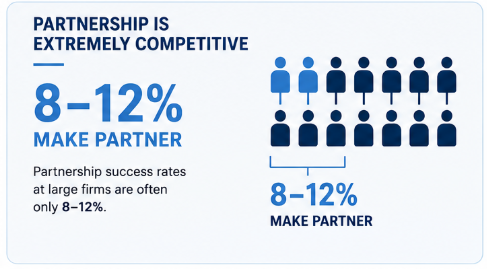
Partnership tracks are highly competitive, especially at larger firms where estimated success rates are often only 8–12%. Because of that, partners tend to spend more time with associates they see as future firm leaders. Those attorneys are brought into client meetings, staffed on more visible matters, and included in conversations beyond the immediate work itself. If you consistently feel overlooked while others around you gain visibility, it is worth paying attention to.
Your Billable Hours Remain Low
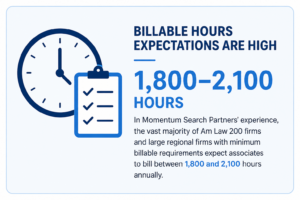
Billable hours are not everything, but they still matter. A lot. In Momentum Search Partners’ experience, most Am Law 200 firms and larger regional firms with minimum billable requirements expect associates to bill somewhere between 1,800 and 2,100 hours annually. Associates may bill more or less depending on the firm, practice area, and market, but consistently falling well below those expectations can create concerns about workload, demand, or overall contribution.
Low hours are not always the associate’s fault. Staffing issues happen, and some practice groups are busier than others. Still, firms often look at billables as one of the clearest indicators of engagement and productivity. If your hours remain consistently low while your peers are heavily utilized, it becomes more difficult for firm leadership to view you as someone progressing toward partnership.
Your Work Doesn’t Stand Out or Stand on its Own
At a certain level, firms expect associates to produce work that requires less oversight. Partners want to trust that assignments will be handled well without constant revisions or follow-up explanations.
That does not mean you can never ask questions. It means your work should start showing judgment and independence. Associates who stay stuck in the “needs heavy review” category for too long often struggle to move beyond midlevel roles because partnership depends heavily on trust.
Failing to Think Ahead and Adapt to Curveballs
Legal work rarely goes exactly as planned. Clients change direction, judges issue unexpected rulings, and deals can shift overnight. Associates who only know how to react to instructions tend to hit a ceiling eventually.
Firms notice attorneys who can anticipate problems before they happen and adjust without needing constant guidance. That ability becomes increasingly important as you move toward leadership roles, where the expectation is not just execution, but judgment under pressure.
You’re Missing Deadlines and Milestones
Missing deadlines consistently creates a reputation problem quickly. Even if the work itself is strong, reliability matters in legal practice because clients and partners depend on timelines being met.
What hurts most is that these issues tend to compound. Once someone develops a reputation for needing reminders or scrambling at the last minute, partners become more hesitant to place them on major matters. Over time, those missed opportunities can quietly affect advancement potential.
Your Professional Development has taken a Back Seat
A lot of associates become so focused on billable work that they stop investing in their broader development. The problem is that partnership is not built solely on technical legal output.
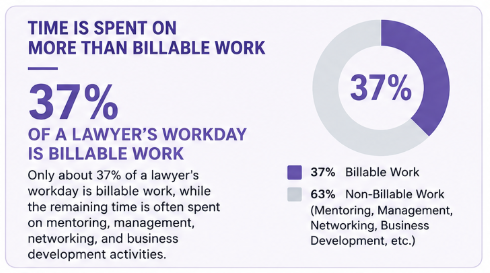
In reality, only about 37% of a lawyer’s workday is billable work, according to LeanLaw. The rest often goes toward networking, mentoring, client development, management, and internal firm responsibilities. Attorneys who ignore those areas may become strong workers, but not necessarily strong partnership candidates.
You’re not Working with Important Clients
Client exposure matters because it shapes how visible you are within the firm. Associates who consistently work on low-priority matters or with smaller clients often struggle to build the internal relationships and trust needed for advancement.
Important clients tend to bring higher stakes, more visibility, and stronger relationships with firm leadership. If years pass and you are still not being included in those matters, it may suggest the firm does not see you as someone they are positioning for partnership.
Not Bringing in New Clients for the Firm
Business development becomes impossible to ignore as partnership conversations get closer. Firms want attorneys who can help grow the business, not just service existing work.
That expectation has only become more pronounced. Reuters reported that partners who actively build networks and client relationships can generate up to 32% more revenue than peers who do not. Associates who show no interest in networking, relationship-building, or developing a future book of business often struggle to move onto a true partnership track.

Overreliance on Mentors and Coworkers
Mentorship is valuable, especially early in your career. The issue is when reliance turns into dependence.
At some point, firms expect associates to operate with increasing independence. If partners feel like your work consistently depends on heavy support from mentors or coworkers, they may start questioning whether you can handle the demands of partnership-level responsibility. Strong future partners usually show signs of ownership before they officially hold the title.
You’re Not Showing Interest in the Business Side of the Firm
At a certain point, partnership stops being just about legal work. Firms start looking at whether someone understands the business itself and whether they think like an owner rather than simply an employee.
That can show up in small ways. Are you paying attention to client retention concerns? Do you understand how matters are staffed or how profitability affects decisions? Are you aware of how business development influences the direction of the practice group? Attorneys who focus only on completing assignments often hit a ceiling, even when the quality of the work is strong.
Partners are expected to help move the firm forward. If leadership does not see signs that you are thinking beyond your own workload, it becomes harder to picture you stepping into that role long term.
When it’s Time to Consider a Lateral Move Instead
Not every firm creates a realistic path to partnership for every attorney. Sometimes the issue is performance. Other times, the opportunity simply is not there, regardless of how strong your work is. Practice groups shrink, partnership classes tighten, and internal politics can shape advancement just as much as performance reviews.
At a certain point, it becomes important to step back and look at the bigger picture honestly. If years are passing without increased visibility, stronger client exposure, or meaningful movement toward leadership, it may be worth considering whether the environment itself is limiting your growth.
A lateral move is not automatically a setback. In many cases, it is how attorneys reposition themselves into firms where their experience, practice area, or long-term goals align more naturally with the opportunities available. Momentum Search Partners works with attorneys navigating those decisions every day and understands how to evaluate whether a move is truly strategic or simply reactive. If you are starting to question whether your current firm still offers a realistic long-term path, it may be time to start a conversation.