We’ve seen it time and again: an associate impresses everyone in the interview, but a trial schedule delays the debrief or another partner requests a meeting. Compensation approval slips another week. By the time the firm is ready to act, the attorney has moved on to another opportunity.
Slow legal hiring can narrow your options, extend a vacancy, and put pressure on the people covering the work. Understanding where those costs arise can help your firm build a more responsive talent acquisition process while giving your firm time to assess experience, judgment, and working relationships.
Missing Top Legal Talent Who May Leave the Market Within Weeks
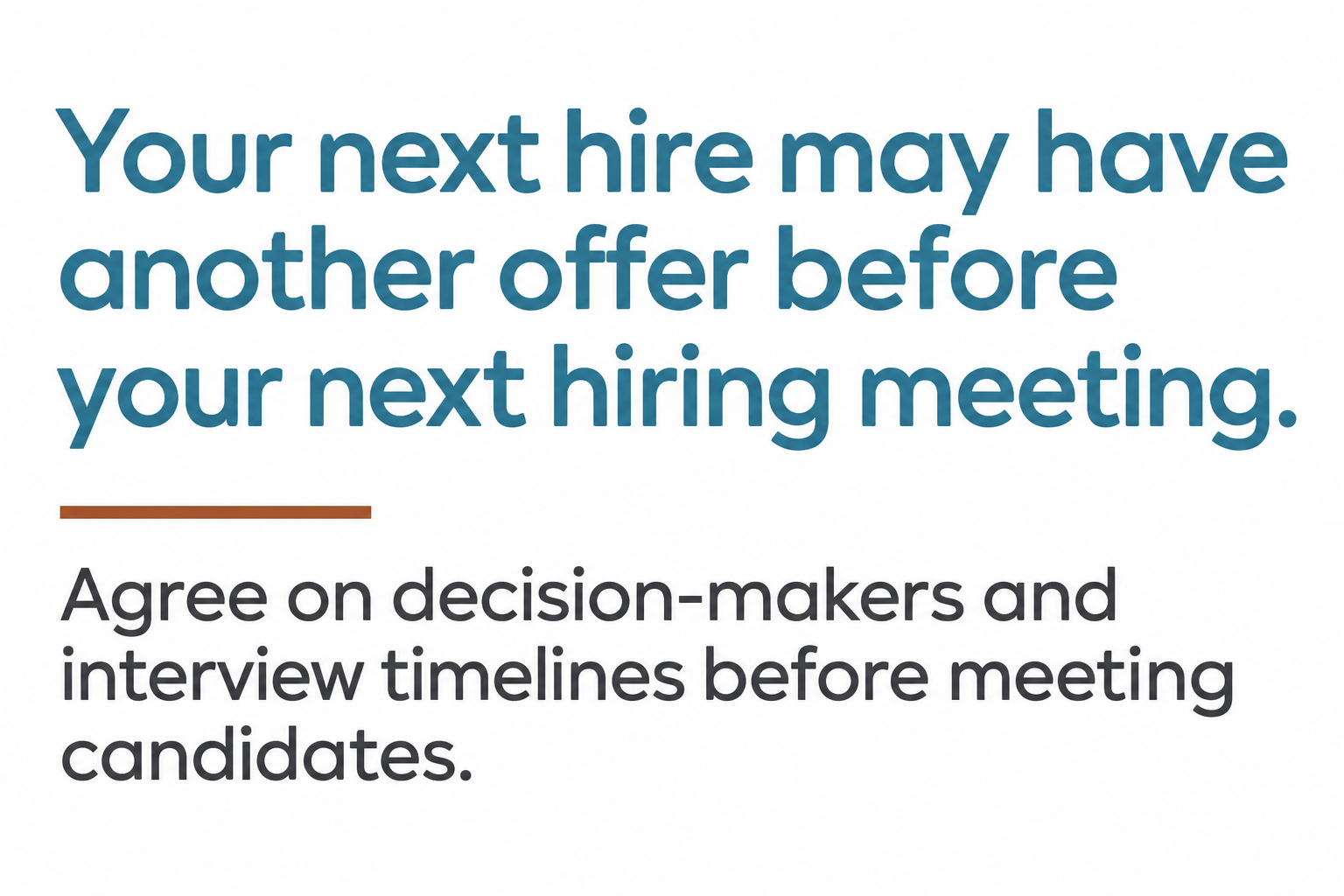
An attorney’s availability depends on where they are in their search when you meet them. A candidate interviewing with your firm for the first time may already be discussing an offer elsewhere. Your internal schedule does not reset theirs.
When we discuss a candidate’s availability, competing interviews and offer deadlines matter alongside the earliest possible start date. An attorney who can give notice in two weeks may need an answer much sooner. Delayed partner feedback can leave your firm evaluating someone who is no longer available, even if the attorney was enthusiastic about the opportunity.
Contributing to Candidate Drop-off
Some candidates withdraw before an offer is even possible. Repeated scheduling changes, additional interviews without a clear purpose, and long gaps between updates can make continuing the process feel difficult to justify.
For employed attorneys, arranging confidential conversations around client obligations takes time and discretion. Our role includes helping candidates understand what happens next, but uncertainty grows when the firm has not settled that question. An interested attorney may stop making room for interviews if there is no clear indication that a decision is getting closer.
Sending Negative Signals About Your Firm’s Culture
Candidates learn about a workplace through the hiring process as well as the interviews. Partners may describe a collaborative practice, yet conflicting instructions about the next step can suggest that decisions are difficult to coordinate.
Silence also leaves room for assumptions. A candidate may wonder whether the position has funding, whether the partners agree on the role, or whether communication will be equally inconsistent after joining. Those impressions may be unfair, but they still influence whether the opportunity feels dependable. A delayed decision can undermine an otherwise persuasive conversation about the firm.
Worried your hiring process is causing you to lose out on top talent?
Losing Productivity and Spending More Time Searching
An unfilled position affects how the practice handles current work. Partners may take on assignments intended for an associate, leaving less time for client development or supervision. New matters may require staffing compromises that would be unnecessary with the intended team in place.
We encourage firms to account for the time their team spends on the search itself. Reviewing another round of resumes, repeating interviews, and revisiting the same criteria pull people away from client matters. If the preferred candidate withdraws and no other finalist meets the requirements, the search may need to reopen. The firm then faces both the missing capacity and another round of work to restore it.
Burning Out the Team Picking Up the Slack
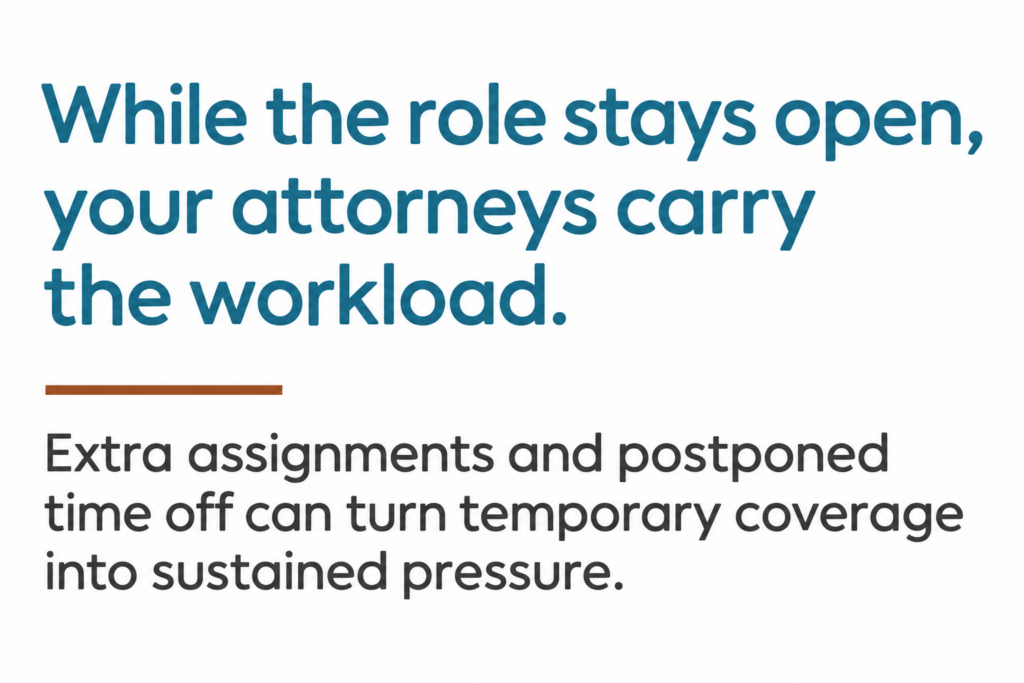
When a vacancy stretches on, the attorneys covering it have less room to absorb unexpected demands. Two associates handling a departed colleague’s matters may manage the scheduled work until an urgent filing or client request disrupts the week. The strain can also leave less time for mentoring and supervision.
The pressure may continue after offer acceptance because notice periods and onboarding still lie ahead. Existing attorneys remain responsible for the work during that transition. Prolonged overload can affect morale, particularly when the team has no clear sense of when responsibilities will return to a manageable level.
Escalating Recruitment Costs Over Time
SHRM’s 2025 benchmarking survey reported an average nonexecutive cost per hire of $5,475 across U.S. employers. That is a general benchmark, rather than an attorney hiring estimate, but it illustrates the investment involved in filling a position.
For a law firm, repeated advertising, renewed screening, and additional interview hours can increase the resources committed to the search. Interim coverage may add expense as well. We recommend looking at those recurring costs alongside the compensation budget when assessing how much avoidable delay is costing your firm.
Accelerating Your Hiring Process Effectively
Before interviews begin, agree on essential qualifications, compensation parameters, and who can approve an offer. Reserve interview time and set a deadline for feedback after each conversation. When a concern arises, identify the specific question that another meeting needs to resolve. Give candidates a realistic update date, and follow through even when the decision is still pending. Predictable communication helps them plan.
At Momentum Search Partners, we help Texas law firms define the candidate profile and screen attorneys against agreed criteria. We also coordinate interviews and guide communication through offer acceptance. Your feedback helps us refine the search and address questions before they become reasons to withdraw. Together, we can keep the process focused on what your firm needs to make a confident decision.
If delays are making it harder to secure the attorneys your practice needs, speak with us about strengthening your hiring process.