Getting an offer accepted can feel like the finish line. The search is done, the role is filled, and it’s easy to assume things are locked in. In reality, that stretch between acceptance and start date is where things can still shift.
Candidates get counteroffers, start to second guess their decision, or hear about another opportunity that wasn’t on the table a week earlier. It happens more often than firms expect, especially in a competitive market.
So what should you do once a candidate says yes? The focus should shift to staying connected and keeping the process moving. That means regular communication, setting clear expectations for next steps, and reinforcing why the role made sense in the first place. Firms that stay engaged during that window tend to see fewer surprises and a much smoother transition when the candidate actually starts.
Keep your new hire engaged so they’re ready on day one.
Immediate Actions to Reduce Candidate Drop-off
Once the offer is accepted, the focus shifts quickly. You are no longer selling the role, you are maintaining momentum. That first stretch matters more than most firms expect, not because accepted offers fall apart constantly, but because the period before a start date is still vulnerable. In legal recruiting, candidate reneges after acceptance are rare. In our experience, we estimate that historically less than 5% of accepted offers fall through, if that, with legal support roles more likely to renege than attorneys. The goal here is simple: remove uncertainty early and keep the experience moving in a positive direction.
Send the Formal Offer Letter
Speed matters here. A verbal offer followed by a delay creates a gap where doubt can creep in. Candidates start to wonder if something changed or if the process is less organized than it seemed.
Getting the formal letter out quickly reinforces that the firm is aligned and moving forward. It also gives the candidate something concrete to review and commit to, which helps stabilize the decision.
Provide a Warm Welcome
The tone you set right after acceptance carries forward. A quick, personal message from the hiring manager or team can go a long way in making the candidate feel like they made the right decision.
This does not need to be overdone. A genuine note that acknowledges their decision and expresses some level of enthusiasm is usually enough to make the interaction feel human.
Notify and Prepare Your Team
Your internal team should know this hire is coming, and they should be ready for it. That includes setting expectations around onboarding, workload, and how the new hire will integrate.
When a candidate senses that a firm is prepared for them, it builds confidence. When that preparation is missing, it creates small signals that something may not be as organized as it appeared during the interview process.
Keeping the Acceptance Warm During Pre-boarding
This is where most firms lose candidates. The offer is signed, but the start date is still weeks away, and during that time, the candidate is still thinking, still talking to people, and in many cases, still being approached by other firms.
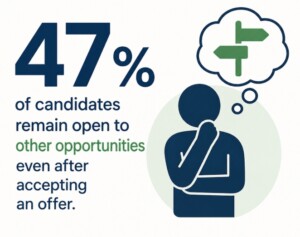
In fact, about 47% of candidates remain open to other opportunities even after accepting an offer. That means you are not just holding a spot, you are continuing to win them over.
Schedule a Casual, Low Stakes Meeting
A quick check-in helps keep the relationship active. It does not need to be formal or structured. The goal is to keep the line of communication open and make sure the candidate still feels connected to the firm. This can also surface concerns early, before they turn into something bigger.
Establish Meaningful Connection to the Team
Candidates are not just joining a role, they are joining a group of people. Introducing them to future colleagues, even informally, helps make that transition feel more real.
It also gives them a clearer picture of how they will fit in. That tends to reduce uncertainty, which is often what drives second thoughts.
Maintain Regular Contact
Silence is where problems start. If a candidate does not hear from the firm for weeks, it can feel like the relationship has gone cold.
You do not need constant communication, but you do need consistent communication. A short update, a check-in, or even sharing something relevant about the firm helps keep things active.
Send Company Branded “Swag”
This is not critical, but it can be effective. A small gesture, like sending something branded, makes the offer feel more tangible.
It signals that the firm is thinking about the candidate as part of the team already. It is a simple way to reinforce connection without overcomplicating things.
Don’t Delay the Start Date When Possible
Long gaps create risk. The more time between acceptance and start date, the more space there is for other opportunities to appear.
Timing also plays a role earlier in the process. Delays beyond 48 hours after interviews can reduce acceptance rates by 20–30%, and that same loss of momentum can carry into the post-offer phase if things slow down. When possible, shorter timelines tend to lead to stronger outcomes.
Bringing it Home in the Final Stretch
As the start date gets closer, the focus shifts again. At this point, the candidate has likely resigned and is preparing for the transition, but that does not mean the risk is gone. Small details matter here. This is where you reinforce the decision and remove any lingering uncertainty.
Start the Paperwork Process When Possible
Getting paperwork started early helps the transition feel real. It also signals that the firm is organized and ready. From the candidate’s perspective, it moves things from theoretical to concrete, which reduces the likelihood of second guessing.
Offer Post-Resignation Support
Resigning can be uncomfortable, especially if the candidate has strong relationships at their current firm. Some will receive counteroffers. Others may face pressure to stay.
Offering support, even in a small way, helps them navigate that step. It shows that the firm understands what they are going through and is invested in the transition.
Make Good on Any Promises You Made
Candidates remember what was discussed during the interview process. If expectations around role, flexibility, or growth start to shift, it creates doubt.
Consistency matters here. If something needs to change, it should be addressed directly rather than left to assumption.
Send a “See You Soon” Letter
A final message before the start date helps close the gap. It reinforces that the firm is expecting them and looking forward to their arrival.
This is less about content and more about tone. A simple, well-timed message can make the transition feel complete.
Common Reasons Top Talent Drops Out
Even when everything seems to go well, candidates still walk away. In many cases, it is not because of a single issue, but a combination of small signals that add up over time.
Broken Promises and Weak Compensation
If the role does not match what was discussed, candidates notice quickly. That can include compensation, workload, or growth expectations. Once trust is impacted, it is hard to recover. Candidates are more likely to step back than try to reconcile the difference.
Counter Offers
Counteroffers are common, and they can be persuasive in the moment. Candidates may feel pressure to stay, especially if their current firm reacts strongly. Without a strong connection to the new role, it becomes easier to reconsider the move.
Inflexibility During Pre-Boarding and Onboarding
Rigid policies, especially around start dates or work arrangements, can create friction. Candidates who felt flexibility during the process may see a different reality after accepting. That shift can lead to hesitation.
Hiring and Onboarding Takes Too Long
Slow processes create space for doubt. Candidates have more time to reflect, compare options, and reconsider their decision. Momentum matters, and when it is lost, outcomes tend to follow.
Weak Employer Brand
Candidates continue evaluating the firm after accepting the offer. What they see online, what they hear from others, and how the firm communicates all play a role. A weak or inconsistent brand can create second thoughts, even late in the process.
Lack of Post-Offer Support and Communication
This is one of the most common issues. Candidates feel engaged during interviews, then experience a drop-off in communication after accepting.
That shift stands out. In fact, 63% of job seekers have rejected offers due to poor treatment during the hiring process, and that perception can carry through the post-offer phase as well.
The Role of Recruiters During the Post-Offer Phase
Even after the offer is accepted, recruiters still play a role. They act as a point of contact, a sounding board, and sometimes a buffer if concerns come up.
Candidates will often share things with a recruiter that they will not immediately raise with the firm. That can include hesitation, competing conversations, or uncertainty about next steps.
When recruiters stay involved, they can surface concerns early and help keep things on track. While accepted offers rarely fall apart in legal recruiting, even a small rate of candidate drop-off can create real disruption when the role is important or difficult to fill. Momentum Search Partners works closely with both candidates and firms through this stage, helping maintain communication, reduce last-minute surprises, and address issues before they put the hire at risk. If candidate drop-off has become a concern for your firm, contact us to strengthen your post-offer process.