For experienced lawyers, a lateral move is rarely just about the job description. Attorneys with established practices or specialized experience are often evaluating the bigger picture: the people they will be working with, the firm’s standing in the market, and what the move could mean five or ten years down the road.
That makes reputation a real part of legal hiring. A firm’s overall reputation can shape a candidate’s expectations before the first interview. For firms competing for high-level legal talent, that reputation belongs in the recruiting conversation alongside the substance of the opportunity itself.
Many Lawyers Think Long-Term About Their Career
Senior attorneys and strong lateral candidates tend to look beyond the immediate opening. They want to know whether the platform can support their practice and whether the move puts them in a stronger long-term position.
That long-term thinking also includes the reputation of the platform a lawyer is joining. A Washington and Lee Law Review article on reputation in the legal profession examines how lawyers’ reputations can act as signals for clients deciding whom to hire and what they expect from their legal representatives. For experienced attorneys considering a move, that broader market perception can matter because joining a firm also ties their own professional reputation to the firm’s.
Losing top candidates due to a bad reputation? Give our team a call today.
Reputation Sets Expectations Long Before First Interaction
A candidate may form an opinion about a firm well before a recruiter makes contact. They may already have heard from peers or formed impressions from the firm’s public presence. On one instance, we spoke with a candidate about a firm that we believed could be a strong fit for her experience and growth. Before we ever could discuss the opportunity in detail, she told us she had already formed a negative impression of the firm. She had heard things from associate attorneys in her network who had relayed the firm has a poor culture, lack of any mentorship and false promises. She, therefore, was not open to learning more about the new opportunity as she trusts her network and was not interested.
That does not mean every comment carries equal weight, but it does mean legal employers should assume that experienced candidates arrive with context. A strong reputation can give an opportunity credibility before the first call. A weaker or inconsistent reputation can create questions that recruiters and hiring leaders need to address directly.
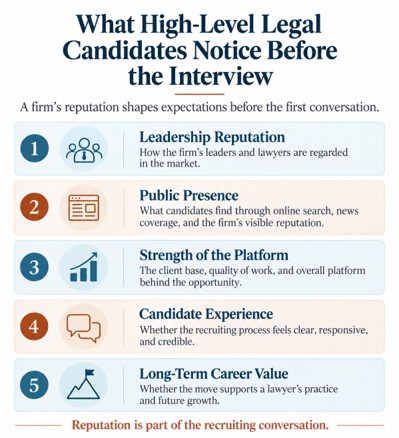
Reputation Can Help Win Clients and Referrals
Reputation also matters outside recruiting. Legal work is relationship-driven, and a firm’s standing can shape how prospective clients, referral sources, and other attorneys view its lawyers and capabilities.
For attorney candidates, that business reputation is part of the platform they are evaluating. Experienced lawyers may ask whether the firm’s reputation and client base can support the kind of practice they want to build. A firm that is well regarded in its market can offer more than a job opening; it can provide a stronger foundation for long-term practice growth and professional relationships.
Reputation Can Influence Courtroom Results
For litigators, a firm’s reputation can be part of how they evaluate the strength of the platform they are joining. Professional credibility can shape how a lawyer or firm is perceived within the legal community, including by judges and opposing counsel.
For a candidate thinking about long-term career value, that perception can matter. Lawyers want confidence that the firm they join can support their success in the courtroom and help them build a strong, sustainable practice beyond it.
AI Is Showing Everything About Your Firm, Even Old News and Reviews
Online search behavior is changing. AI-powered search experiences can pull together information from many different sources at once, including older material that may not appear prominently in a traditional search. Instead of reviewing results one page at a time, a candidate may receive a synthesized picture of what has been written about a firm across the web.
That means a dated article, old review, or long-forgotten mention can become relevant again when AI surfaces it alongside newer information. For legal employers, the practical issue is whether that combined picture still reflects the firm accurately today.
Reputation Is Hard to Build, But Easy to Damage
Reputation develops over time through the way a firm operates and how consistently its day-to-day conduct matches the image it presents to the market. In recruiting, a poorly handled hiring process can undercut years of stronger signals.
Legal employers can make reputation part of their broader legal recruitment strategy by:
- Clarifying what candidates should understand about the opportunity and where it can lead.
- Keeping attorney bios, practice descriptions, and job postings current.
- Treating every candidate interaction as part of the firm’s market reputation.
- Using a legal recruiter who can strengthen candidate sourcing with an understanding of what attorneys are hearing in the market.
Build a Reputation Lawyers Want to Join
Employer reputation is part of the candidate experience before the candidate ever enters the process. Firms that want to attract high-level lawyers should pay attention to the signals they are sending, address recurring issues honestly, and give candidates a clear, credible picture of the opportunity.
Momentum Search Partners works with law firms and legal departments across Texas and understands how market perception can shape a search. If your firm is preparing to hire experienced legal talent in Austin, Dallas, Houston, or elsewhere in Texas, speak with us today about building a search strategy that reflects both the role and the reputation behind it.