A lateral move can be a smart step: better platform, stronger compensation, clearer path to partnership, more flexible expectations, or work that better matches where a lawyer wants to build a career. But when the move is based too heavily on the offer itself, regret can show up quickly. A lateral move can be the right step for an attorney’s career, but regrets often come from limited visibility into the new firm, the local market, practice expectations, or what the attorney may be giving up.
Below are seven lateral move mistakes attorneys often regret, along with practical ways to pressure-test a potential move before accepting. For attorneys considering law firm lateral moves in Texas, the strongest decisions usually come from looking beyond title and compensation and asking how the opportunity fits long-term career progression, client relationships, and day-to-day practice life.
Failing to Establish Key References Before Leaving
References matter long after a lawyer has accepted a new position. Attorneys sometimes assume that strong work product and good relationships will speak for themselves. Then, when they leave quickly or without a thoughtful transition, they weaken the very relationships that could support future lawyer career moves.
Before giving notice, attorneys should think through who can credibly speak to their judgment, responsiveness, client service, writing, leadership, and practice strengths. The goal is to leave with professionalism, preserve trust, and make sure key people understand the reason for the move.
Taking a Position That Makes You a Generalist
Some lateral moves look attractive because the new role promises variety. Variety can be useful, especially for a lawyer who is still clarifying a long-term direction. But too much variety can dilute the practice identity an attorney has worked to build.
A litigation associate who wants to become known for complex commercial disputes may regret moving into a seat that handles every type of matter the firm needs covered. Before accepting, attorneys should ask what percentage of their time will be spent in the practice area they want to own two or three years from now.
Look before you leap. Talk to us about your next lateral move.
Not Researching Work-Life Balance Beforehand
Work-life balance is one of the easiest topics to discuss vaguely and one of the hardest to fix after a move. “Flexible” can mean true autonomy, or it can mean late-night work with permission to work from home. “Reasonable hours” can mean something very different across practice groups, offices, and partners.
Attorneys should ask direct but professional questions about billable expectations, staffing, remote or hybrid norms, partner responsiveness, weekend work, and urgent requests. The better question is often not “What are the hours?” but “What does a heavy month look like here, and how often does that happen?”
Making a Lateral Move Too Soon Early Career
Early-career attorneys can feel pressure to correct a less-than-perfect first job quickly. Sometimes that is the right call, especially when the role lacks training, mentorship, substantive work, or a viable practice path. The risk is moving before there is enough experience to evaluate what is actually wrong.
A first- or second-year associate may be frustrated by long hours when the bigger issue is lack of feedback. Another may leave for more responsibility without realizing they still need a stronger foundation. Short tenure is not automatically a problem, but repeated attorney job changes can raise questions.
Leaving Behind an Established Book of Business
For partners and senior attorneys, a lateral move can affect more than personal compensation. It can change client relationships, referral patterns, billing rates, support staff, conflicts, succession planning, and the economics behind a book of business.
An established book does not always travel cleanly. Clients may like the lawyer but resist a new rate structure. Conflicts may limit which matters can move. A new firm may value portable business differently than the attorney expected. Before making a move, attorneys should understand client portability, transition requirements, compensation treatment, origination credit, and how the new platform will help them grow the practice.
Failing to Understand the New Firm’s Culture and Success Metrics
Law firm culture mismatch is one of the most common reasons a lateral move feels different after the start date. Culture is more than whether people are friendly during interviews. It shows up in how work is assigned, how partners communicate, how associates get feedback, how origination credit is handled, and what the firm rewards.
Attorneys should ask how success will be measured in the first six months and the first year. Is the firm looking for immediate portable work, internal integration, leadership, billable capacity, cross-selling, or practice-area depth? The American Bar Association has also noted that between an attorney’s work style and a firm’s culture, expectations, and incentives. A lawyer who understands the scorecard and the day-to-day working environment can make a better decision and start with fewer surprises.
Not Knowing the Local Market Before a Lateral Move
Local market knowledge matters, particularly in Texas. Austin, Dallas, Houston, San Antonio, and other Texas legal markets do not move in lockstep. A role that looks strong nationally may not provide the same opportunity, client base, compensation context, or practice trajectory in a specific city.
NALP reported that U.S. law firm lateral hiring increased 16.4% in 2025 among surveyed offices and firms, but the same report noted that outcomes varied by city, region, and firm size. Reuters also described 2025 as a year of significant legal talent movement, with continued lateral movement expected as firms and lawyers respond to rate pressure and changing platforms.
For Texas attorneys, that means looking at the specific office, practice group, client base, competing platforms, and reputation of the firm in the relevant market. A Texas-based legal recruiter can help separate a strong opportunity from one that only looks strong from the outside.
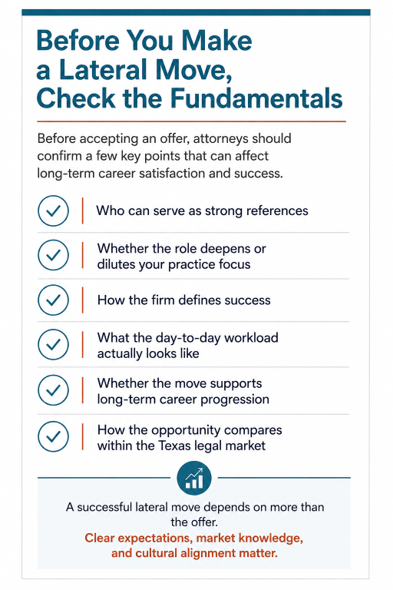
A Successful Lateral Move Isn’t Just About Getting the Offer
The offer is only one part of a successful lateral move. Attorneys also need to understand why the role is open, what the firm expects, how the practice fits into the larger platform, and what the move will mean for career progression. The strongest lateral moves hold up under practical questions: Will the work build the attorney’s practice identity? Will the firm support the lawyer’s goals? Will the compensation model make sense after year one?
Momentum Search Partners helps attorneys and legal employers evaluate these questions with a practical understanding of the Texas legal market. If you are weighing a lateral move, planning your next legal career step, or trying to avoid lateral move mistakes, speak with us today or submit your resume to start a confidential conversation.