Lawyers are trained to evaluate risk, facts, and leverage. However, evaluating law firm culture is harder. A role may look strong on paper, but the day-to-day environment tells a different story. For attorney candidates in Texas markets like Austin, Dallas, and Houston, cultural fit can shape whether a move supports long-term growth or becomes a short stop on the résumé.
Before accepting an offer, look beyond the formal pitch. Determining if a firm has the right cultural fit for you often comes down to what matters to you, what the organization’s core values are, and using the interview and online research as your own version of discovery. This guide explains how to research a firm, ask better interview questions, read behavioral cues, and organize what you learn before making a decision.
Why Cultural Fit Matters to Lawyers
Cultural fit directly affects the experience of practicing law:
- How work is assigned
- How feedback is delivered
- How teams handle pressure
- Whether leadership follows through on stated values
A lawyer who wants close mentoring may struggle in a highly autonomous group. Another attorney may prefer lean teams and direct partner access. Yale Law School’s career guidance encourages candidates to assess culture through interviews and conversations with people who know the firm.
Define Your Own Goals and Values First
You cannot assess cultural fit clearly until you know what you are measuring against. Before comparing firms, identify what matters most in your next move, like:
- Mentorship
- Independence
- Training
- Flexibility
- Client contact
- Partnership opportunity
- Schedule predictability
- Practice focus
- A stronger platform or position in a particular Texas market
Your answers will help you separate a compatible opportunity from one that is attractive mainly on paper.
Get help assessing an offer before you accept by talking to our team.
Find Where the Firm Is Being Talked About and What Is Being Said
Public information will not tell the whole story, but it can show patterns worth exploring. Review the firm’s website, attorney bios, practice pages, recent news, bar involvement, and public commentary. Look for consistency between stated values and how the firm presents its lawyers, clients, leadership, and community work. Pay attention to office-level information because a Houston office may operate differently from the same firm’s Dallas or Austin office.
Identify the Organization’s Core Values and Mission
Most firms publish values, mission language, diversity commitments, training statements, or community involvement pages. Read those pages with a practical eye. If a firm emphasizes mentorship, ask how feedback works. If it highlights entrepreneurship, ask how lawyers are supported in building relationships. If it promotes collaboration, ask how matters are staffed across offices or practice groups.
Connect with Current and Former Employees When Possible
Conversations with current and former lawyers can add context that a formal interview may not provide. Reach out through law school alumni networks, bar associations, former colleagues, or a trusted recruiter. Ask about the daily experience rather than gossip: What surprised you after joining? How accessible are partners? What kinds of lawyers tend to do well there? Weigh every answer carefully, especially when one person’s experience may reflect a specific team or moment in time.
Evaluate Work Ethic and Methods
Every law firm expects strong work, but firms vary in how the work gets done. Some teams prize face time and quick responsiveness while others focus more on autonomy, clear deadlines, and results. Ask how matters are staffed, how availability is handled, what peak periods look like, and how the firm supports lawyers when deadlines collide. The most important question is whether the firm’s working style matches how you practice best.
If you are evaluating a move with long-term advancement in mind, look closely at how the firm defines success, who receives meaningful opportunities, and whether the path ahead is realistic. Our guide to signs you’re not making law firm partner offers additional perspective on signals that a firm’s structure may not support your goals.
Ask the Right Questions During Interviews
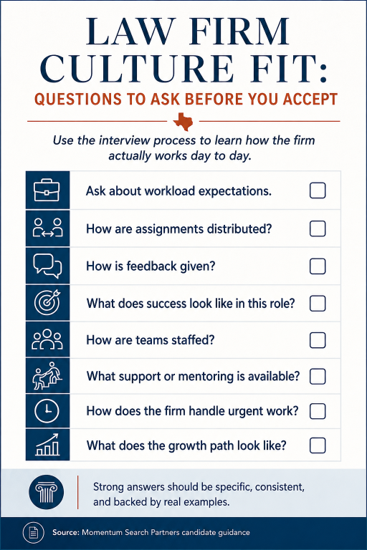
Broad questions often produce broad answers. Instead of asking, “What is the culture like?” use the interview to learn how the firm actually operates: how work is assigned, how feedback is given, how attorneys are integrated into teams, and what success looks like in the role.
Listen for substance. Strong answers usually include examples, clear expectations, or candid discussion of tradeoffs. If different interviewers give very different answers about workload or communication style, make a note and follow up before moving forward.
Observe Behavioral Cues and Body Language
Interviews provide information beyond what’s being said. Notice whether interviewers are prepared, whether they understand the role, and whether their descriptions are consistent. Watch how lawyers interact with staff and whether they speak respectfully about colleagues. Repeated interruptions, vague answers about expectations, visible discomfort when discussing turnover, or dismissive comments about boundaries deserve follow-up.
Document Your Thoughts After Interviews
After each conversation, write down what you learned while the details are fresh. Note who you met, what they said about the role, what felt clear, and what still needs follow-up. This helps you avoid over-weighting the last conversation or the most persuasive interviewer when comparing opportunities.
Red Flags of a Poor Cultural Fit
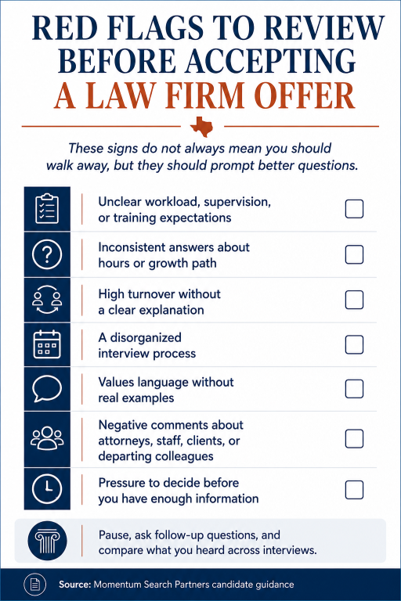
Some concerns are easy to overlook when the role, compensation, or practice opportunity looks strong on paper. Before accepting an offer, step back and compare what you heard across the interview process. Look for patterns in how the firm explains workload, supervision, growth, communication, and decision timelines.
Red flags do not always mean you should walk away. They mean you should slow down, ask more specific follow-up questions, and make sure the answers are consistent before committing.
Make Your Decision with the Full Picture
Choosing a law firm is both a professional decision and a personal one. The best process combines research, direct conversations, interview observation, and honest self-assessment. When lawyers take cultural fit seriously, they are better positioned to choose a firm where they can do strong work, build trusted relationships, and grow with more confidence.
If you are considering a move within the Texas legal market, Momentum Search Partners can help you evaluate opportunities with practical insight into firms, roles, and career direction. Submit your resume or speak with us today.