Partner compensation is getting harder to read from the outside, especially in Texas. A lateral partner in Dallas, Houston, Austin, or another Texas market is weighing more than a headline number. Public wage data is useful context, but it does not capture partner profits, equity draws, origination credit, or confidential bonus pools.
This overview looks at lawyer compensation and salary trends affecting Texas law firm partners. Portable business, billing rates, firm platform, practice demand, equity status, and city-by-city competition all shape whether a package actually supports the next stage of that lawyer’s career. Use the trends below to ask better questions before a lateral move.
How the Texas Market Is Changing as a Whole
Texas has a large attorney population, but partner compensation pressure is concentrated in the major legal centers. The State Bar of Texas reported 116,127 active in-state Texas attorneys in 2024, up about 20% from 96,912 in 2014.
That concentration matters for lateral partners. In 2025, the State Bar reported that 91% of Texas attorneys were in the state’s 10 largest metros, with 85% in the four largest. Those are the markets where firms are competing most heavily for portable business, client relationships, and platform-building partners.
Broader wage data adds context, though it should not be treated as a benchmark for large-firm or partner compensation. BLS OEWS data reports a national mean annual wage of $185,840 for lawyers as of May 2025, but that figure blends many types of legal roles, employers, firm sizes, and markets.
That national mean also needs context. It includes lawyers across government roles, solo practices, small firms, smaller communities, public interest roles, and other settings that do not operate on large-law-firm compensation models. For lawyers who begin their careers in the largest firms, the starting point can look very different.
Get confidential insight before negotiating your next partnership opportunity.
BigLaw Is Driving the Market Upwards
Large-firm economics are influencing expectations across Texas, with industry reporting pointing to rising partner compensation, billing rates, and bonus pools at the top of the market. For partners, a larger first-year number is not always the best outcome. The full structure matters, including draw, guarantee length, bonus timing, origination and cross-selling credit, capital requirements, rate flexibility, and firm investment in the practice.
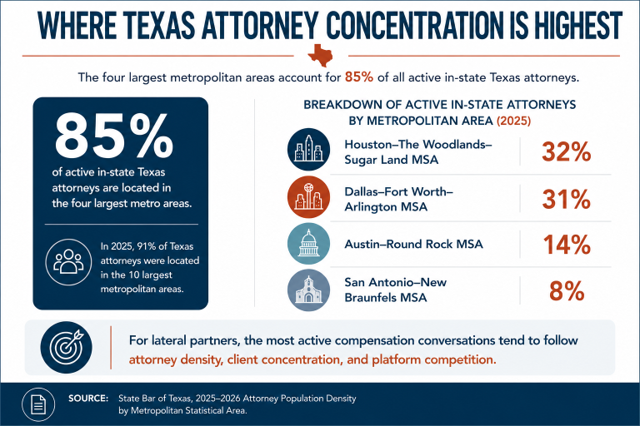
Texas Cities with the Biggest Changes
Partner compensation shifts vary by market. Houston and Dallas-Fort Worth continue to drive many of the state’s most competitive conversations because both have major firm offices, corporate clients, and high-level litigation and transactional work.
Austin’s smaller market is shaped by technology, venture-backed companies, regulatory work, and relocation activity. San Antonio is more selective, with stronger opportunities tied to key regional industries.
For candidates, location matters because compensation depends on how well the partner’s book, rates, clients, and growth plan fit the local platform.
Practice Areas Seeing Notable Shifts
The biggest compensation shifts are showing up where client demand is strong and portable business fits the firm’s platform. In Texas, that often includes corporate transactions, private equity/investment funds, energy, infrastructure, real estate, and commercial litigation. The label matters, but the platform matters more: partners have more leverage when their book, rates, clients, and growth plan align with the firms investing in that work.
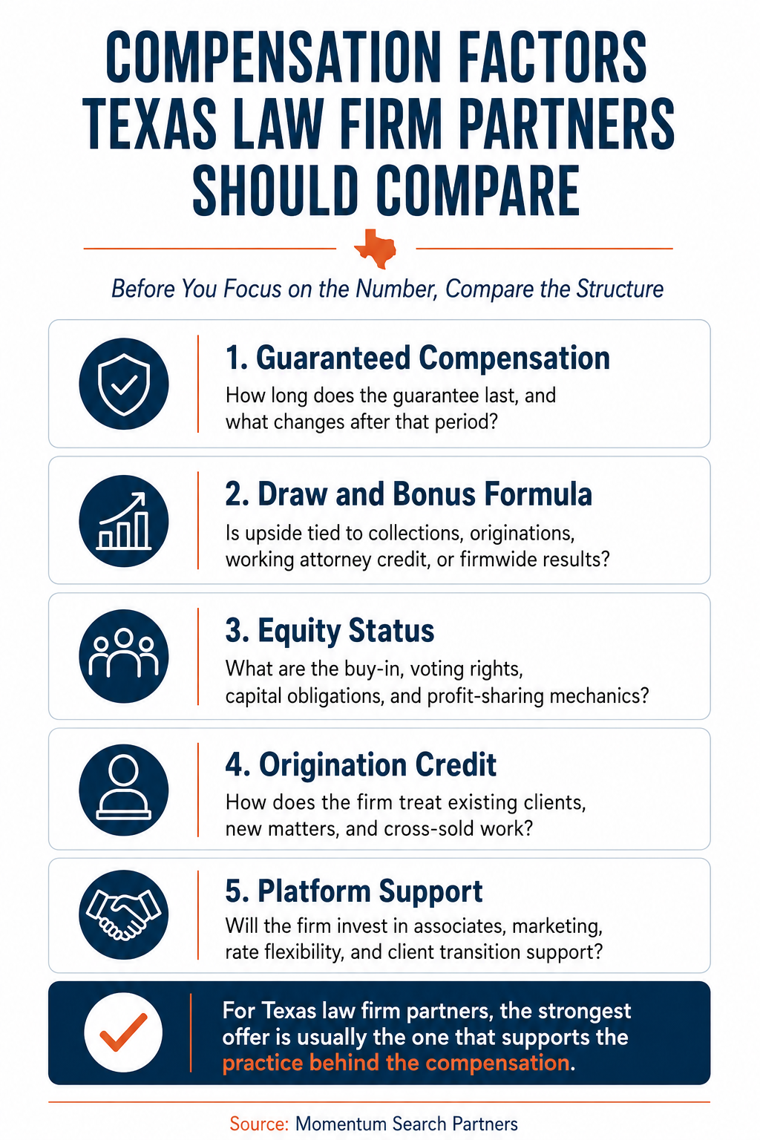
Equity vs. Non-Equity Movement
Equity status matters, but the label does not tell the full story. A non-equity offer can still be attractive if it includes strong guaranteed compensation, a clear bonus structure, and fewer financial obligations.
An equity offer may provide more long-term upside, but partners should understand the full terms, including buy-in, draw mechanics, profit sharing, voting rights, capital obligations, and retirement rules. The key is to compare the full compensation structure, not just the title or first-year number.
Momentum Search Partners works with attorney candidates across Texas who are evaluating lateral opportunities, relocation, and long-term fit. If you are comparing partner compensation options or trying to understand how a move may affect your practice, speak with us today for practical, confidential guidance.