Mentorship is one of those things most firms say they value. It shows up in recruiting conversations, on careers pages, and in internal initiatives. But in practice, it’s often informal, inconsistent, or left to chance. Some attorneys get strong guidance early on, others figure things out on their own, and the experience can vary widely within the same organization.
So why do mentorship programs matter more than firms tend to think? Because they shape how attorneys actually grow once they’re in the door. Not just skills, but confidence, judgment, and how they handle real work. When mentorship is structured and consistent, people ramp up faster and feel more grounded in their role. When it’s not, things take longer, and some people never quite catch up.
Build stronger teams with more intentional mentorship.
The Role of Mentorship Programs in Employee Development
Most attorneys don’t learn the job just by doing the work. They learn it by watching how others handle situations, how they communicate with clients, and how they make decisions under pressure. That kind of development doesn’t come from training manuals or formal onboarding. It happens through exposure, repetition, and guidance from someone who has already been through it.
That’s where mentorship comes in. A structured program gives newer attorneys a clearer path, not just in terms of skill development, but in how to navigate the profession itself. Without that, growth tends to be uneven. Some people figure it out quickly. Others take longer or develop gaps that are harder to correct later.
Why Mentorship Programs Matter to Law Firms
Mentorship tends to show its value in a few key areas, especially when it’s built into how a firm develops talent and supports its teams.
Build or Develop Talent In-house
Law firms spend a lot of time and resources hiring talent, but development often gets less attention once someone is in the door. Mentorship helps close that gap. Instead of relying on trial and error, firms can guide attorneys more intentionally.
Over time, this creates a more consistent level of performance across teams. It also reduces the need to rely on lateral hiring to fill gaps. When firms invest in developing their own people, they build a stronger bench and more stability long term.
Add a Competitive Edge for Hiring
Candidates ask about mentorship more often than firms expect. It’s not always the first question, but it comes up, especially with junior and mid-level attorneys who are thinking about long-term growth.
Most firms say they offer mentorship, but according to a recent Gallup poll, only about 40% of employees report actually having a mentor at work. That gap is noticeable. Firms that can point to a structured, consistent program stand out, especially when candidates are comparing similar opportunities.
Improve the Skills of Both Mentor and Mentee
Mentorship is not one-sided. While mentees are learning how to handle the work, mentors are refining how they explain it. That forces a level of clarity that often improves their own performance. It also builds leadership skills in a way that is hard to replicate through formal training. Senior attorneys who mentor regularly tend to become better managers, better communicators, and more aware of how their teams are developing.
Increase Loyalty and Reduce Turnover
Retention is where mentorship really starts to show its value. Attorneys are more likely to stay when they feel supported and see a path forward.
Employees in mentoring programs have about a72% retention rate, compared to 49% for those without. That gap is significant, especially in an industry where lateral movement is common. When people feel like they are learning and progressing, they are less likely to start looking elsewhere.
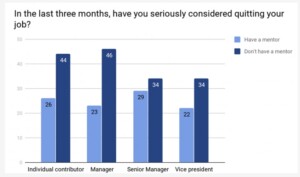
Source: MentorcliQ
Stronger Teams and Better Communication
Mentorship tends to break down some of the barriers between levels of seniority. It creates more regular interaction between attorneys who might not otherwise work closely together.
That carries over into how teams function day to day. Communication becomes more direct. Expectations are easier to understand. There is less hesitation around asking questions or raising concerns. Over time, that leads to a more cohesive and effective team.
Why Attorneys Should Seek Out Mentors
From the individual side, having a mentor can shape how quickly you grow and how you navigate the early and middle stages of your career.
Gain Extended Access to Experience and Knowledge
There are certain things you only learn after years of practice. How to manage a difficult client. How to handle a mistake. How to make judgment calls when the answer is not obvious. Having access to someone who has already been through those situations can shorten that learning curve. It does not replace experience, of course, but it helps you build it more intentionally.
Get Immediate Feedback on Your Work
In many firms, feedback can be delayed or limited to formal reviews. That makes it harder to adjust in real time. Working alongside a mentor gives you a way to get more immediate input. You can ask questions, test your thinking, and get a clearer sense of what is working and what is not. That kind of feedback tends to be more useful because it is tied directly to what you are doing day to day.
Build Skills that Can Improve Your Career (and Earnings)
Career progression in law is not just about technical ability. It is about judgment, communication, and how you manage relationships. Mentors can help you develop those skills earlier. They can point out things you might not notice on your own and help you avoid common mistakes. Over time, that can affect how quickly you advance and the opportunities that become available to you.
Grow Your Network While on the Clock
Networking is often treated as something separate from the work itself. But mentorship changes that a bit.
Through a mentor, you are introduced to people, perspectives, and opportunities that you might not have access to otherwise. Those connections build over time and can have a lasting impact on your career.
There is also a simple reality here. Employees with mentors report higher levels of satisfaction, with one CNBC survey showing that about 90% of employees with a mentor say they are happy at work. That tends to reflect not just the relationship itself, but the broader sense of connection that comes with it.
Mentorship tends to show up in quieter ways. You see it in how quickly someone gets comfortable in their role, how they handle pressure, or how confident they are when something unexpected comes up. It is not always tracked, but it has a real impact on how a team develops over time.
Momentum Search Partners works with firms that pay attention to those details, especially as they relate to hiring and long-term fit. If you are thinking about how your team is developing, or where gaps might exist, it is worthstarting a conversation.