A higher base salary can make a law firm offer look easy to compare. In practice, two offers with similar salaries can feel very different once you account for bonuses, origination credit, billable expectations, flexibility, benefits, and what the role may demand from you over the next few years.
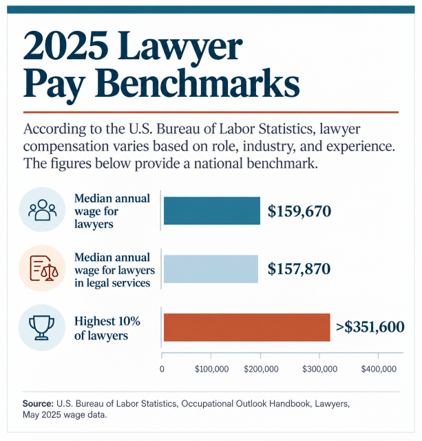
Salary negotiation should focus on the full package and how it fits the role and your goals. The U.S. Bureau of Labor Statistics reported a median annual wage of $159,670 for lawyers in May 2025, with a median of $157,870 for lawyers working in legal services. Those figures provide a broad benchmark, but a Texas law firm offer may include other components that materially change its value.
Sign-on and Ongoing Bonuses
Start by separating guaranteed compensation from compensation you may or may not receive. A sign-on bonus is easier to evaluate because the amount and payment timing can be stated in the offer. Ongoing bonuses require more questions.
Ask what triggers the bonus, how often lawyers at your level actually earn it, and whether it is based on billable hours, collections, firm performance, individual performance, or another metric. Depending on the firm, other incentives may include recruiting or referral bonuses, or credit tied to training, mentoring, or business development. Confirm how each item is treated rather than assuming every incentive is paid as cash.
For example, a $190,000 base salary with a $20,000 attainable annual bonus has a potential cash value of $210,000. If the bonus depends on a threshold you are unlikely to reach, comparing the offer at $210,000 would overstate its practical value.
Need help with your job search and evaluating offers?
Origination Credits
For lawyers who bring or expect to build a book of business, origination credit can materially affect law firm compensation. Law firms handle origination credit in different ways: some use a first-touch approach, while others share, transfer, or periodically reallocate credit based on contributions to the client relationship.
Ask who receives credit when a client is introduced, how it is divided when several attorneys contribute, whether it continues indefinitely, and how collections factor into the calculation. Those details can affect both current compensation and your ability to grow a practice inside the firm.
Work Location and Billable Hours Flexibility
Remote or hybrid work can have economic and practical value even when it does not appear on a compensation statement. Fewer commuting days may reduce transportation, parking, meal, or childcare costs. Ask whether the arrangement is a firm policy, a practice-group norm, or something that may vary by partner or matter.
Billable expectations deserve the same scrutiny. BLS notes that most lawyers work full time and some work more than 40 hours per week. Ask about the stated billable requirement, what counts toward it, and how consistently comparable attorneys meet it. A higher salary can look different once you understand the hours and availability expected to earn it.
Reimbursement for Professional Development and Bar Dues
Ask which professional expenses the firm covers. Bar dues, CLE, conferences, professional memberships, and business-development expenses can add up over a year. The dollar amount may be modest relative to salary, but reimbursement also shows how a firm supports professional development. Confirm whether reimbursement is automatic, subject to approval, or capped annually.
Benefits and Retirement Plans
Health coverage, retirement contributions, paid leave, disability coverage, and other benefits belong in the comparison. In March 2026, BLS reported that 83% of private-industry workers in professional and related occupations had access to retirement benefits and 70% participated. This is a broad occupational benchmark, not a law-firm-specific measure.

When comparing offers, estimate the employer-paid value where you can. If one firm contributes $8,000 more annually toward retirement and insurance than another, a $5,000 salary difference may not tell the full story. Review employee premiums, deductibles, employer contributions, vesting schedules, and waiting periods.
Mentorship and Career Support
Compensation matters now; mentorship can influence the work you are trusted with later. Ask who will review your work, how matters are staffed, whether partners actively develop associates, and how much client contact attorneys at your level receive.
Training, client exposure, and support for business development can shape your path toward greater responsibility or partnership. That career value can be difficult to reduce to a single dollar figure.
Growth Potential and Workload
Look beyond the first year. What would success in the role lead to in two or three years? Ask about promotion criteria, partnership track, business-development expectations, and whether compensation changes as responsibility grows.
Also consider the time required to reach those milestones. If one role pays $15,000 more but routinely requires substantially more hours, decide whether that tradeoff fits your priorities. Compensation, workload, flexibility, and trajectory should be evaluated together.
Questions You Should Be Asking
- What is the total estimated monetary value of salary, bonus opportunities, retirement contributions, insurance, and other benefits?
- Is the package competitive for this role and the relevant Texas market?
- How many lawyers in similar positions receive the ongoing bonuses described?
- What are bonuses based on, and are the criteria documented?
- Does the position fit your workload, flexibility, and career priorities?
- What do the partnership track and promotion criteria look like in practice?
Can a Legal Recruiter Help You Negotiate Better Compensation?
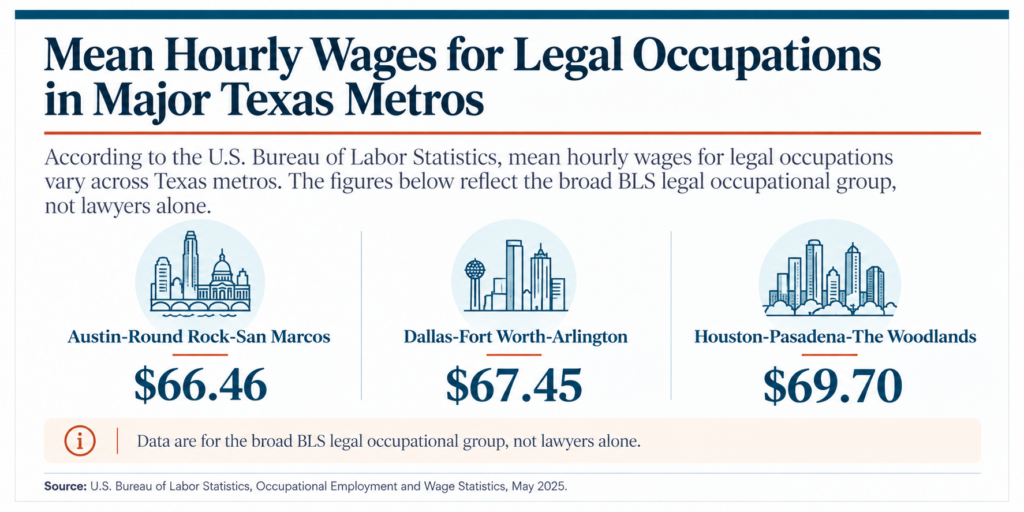
A legal recruiter can help you understand the moving pieces in an offer, identify questions worth asking, and provide market context. We provide candidates with candid input throughout the hiring process and offer market data and appropriate compensation recommendations while they are considering an offer.
Negotiation outcomes depend on the employer, the role, and the candidate’s leverage. A recruiter can help you enter the conversation with clearer priorities and a fuller view of the package. If you are weighing a law firm move in Austin, Dallas, Houston, or elsewhere in Texas, speak with Momentum Search Partners today about the offer and the career opportunity behind it.