Many people think the recruiting process is straightforward. You meet with a recruiter, give them your resume, and wait to hear about available positions. If something fits, you proceed. If it doesn’t, you keep looking.
Although things rarely go that smoothly. The process depends heavily on communication, as well as honesty from both parties.
So what does honesty actually look like when working with a legal recruiter? It shows up in how direct you are. Be clear about what you want, even if the answer is still evolving. Share if you’re in other interview processes, what you’re targeting in terms of compensation, and any hesitation you have about a role.
If something isn’t a fit, say it plainly. Something like, “Thank you, I don’t think this is the right fit because the work doesn’t align with what I’m looking for,” is enough. You don’t need to overexplain it.
That kind of clarity makes a big difference. It gives the recruiter something tangible to work with, helps them position you more accurately, and cuts down on the back and forth that doesn’t lead anywhere.
Honesty Sets Realistic Expectations for Both Parties
Keep in mind, a recruiter can only work with what they’re given. If your expectations are clear, the process tends to move in a more focused direction. If they’re vague or constantly shifting, it becomes harder to match you with the ideal role.
This frequently arises around compensation, desired practice area, or relocation preferences. Saying what you think a recruiter wants to hear might keep the conversation moving for the moment, but it often leads to reviewing positions that don’t fit well. The recruiter is left trying to piece together a direction that isn’t clearly defined.
Being upfront, even if your answer is “I’m not sure yet,” gives recruiters a clearer starting point and keeps the process focused on roles that actually make sense for you.
Lying Can Damage Your Reputation
This is the part people don’t always want to say out loud. Candidates stretch the truth. It happens all the time.
Some of it is small. Framing experience a little more generously. Sounding more certain than you actually feel. In other cases, it goes further. A recent Forbes study has found that a large majority of candidates admit to some level of dishonesty during interviews, and in some cases it’s closer to 80%.
The issue isn’t that recruiters expect absolute perfection. It’s what happens when details don’t line up. Dates shift, responsibilities change, or the story sounds different depending on the conversation. Once that inconsistency shows up, trust is affected and rebuilding it can be difficult. When a recruiter’s confidence is shaken, it often leads to hesitation when presenting you to clients.
Honesty doesn’t require a flawless record, and most people don’t have one. It means clearly communicating what you’ve actually done and where you’re still developing. That tends to come across as more credible than a version that sounds polished but doesn’t fully hold together.
Being Unclear Can Waste Time and Slow the Process
Not every issue comes down to dishonesty. A lot of the time, the problem is just a lack of clarity.
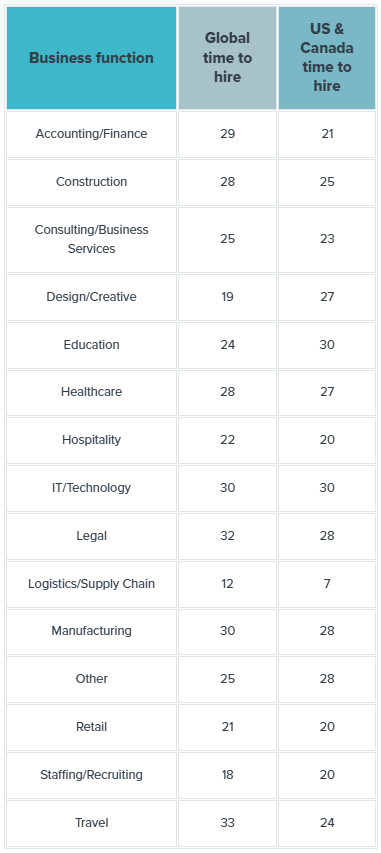
The hiring process already moves fairly quickly in the legal industry. Recent data shows the average time to hire is about 28 days. When priorities aren’t clear, that timeline can stretch without much progress. Candidates often end up in conversations about roles they were never seriously considering, with interviews scheduled and then cancelled as uncertainty about their preferences makes feedback harder to pin down.
Clear, direct communication keeps the process moving and produces more useful outcomes. Tell the recruiter early if a role isn’t a fit and flag any shift in priorities so they can adjust and keep the focus on opportunities that actually make sense.
Source: Resources for Employers
Honesty Enables Actionable Feedback for All Parties
Honesty leads to actionable feedback that actually improves the process. Clearly explaining what worked, what didn’t, and where you had concerns gives recruiters concrete information to refine role matches and provide more useful feedback to employers, which can improve how roles are positioned and how interviews are run going forward.
When honest feedback is missing, feedback becomes diluted and hard to act on. Everything turns into “not the right fit,” which offers no real direction and slows the process down. Specific, direct input gives recruiters something to work with and helps keep things moving forward.
Helps Match the Right Candidate with the Right Role
The goal is to land in a position that clearly fits your needs, not just secure an offer. That only happens when the recruiter has a clear understanding of what you’re looking for. Specify your desired practice area, workload, client type, team structure, and long-term goals. When those preferences are unclear or constantly changing, the matches tend to miss, and you might get roles that seem promising on paper but don’t feel right once you dig in.
When candidates are upfront about what they want and don’t want, the process becomes a lot more targeted. There are fewer distractions, fewer mismatches, and a better chance of ending up in the right environment.
Honesty Can Improve How Recruiters Manage Candidates
Recruiters are juggling a lot of moving pieces at once. There’s multiple candidates, multiple roles, shifting timelines, etc. Greater accuracy in candidate information allows recruiters to manage the recruiting process, timing, and follow-ups more effectively.
When candidates clearly communicate their level of interest, availability, and any competing opportunities, recruiters can prioritize appropriately, knowing when to press forward, when to step back, and where to focus their efforts. Without that clarity, recruiters rely on assumptions, which can lead to missed timing or unnecessary follow-ups.
Direct communication does not increase complexity. It allows recruiters to manage your candidacy based on your stated priorities rather than guesswork.
Using a recruiter works best when communication is straightforward. Answers do not need to be perfect or fully formed, but they should be clear. It means being clear about your position and priorities. That clarity keeps things moving with direction instead of drifting.
At Momentum Search Partners, we work with candidates across legal roles, and we see how small communication details shape outcomes. If you are considering your next move and want a clearer, more focused approach, we are here to talk.