Work from home used to be a temporary solution. Now it’s part of how most legal teams operate, whether they planned for it or not. Some firms have leaned into it. Others have tried to pull things back in-office. Most are somewhere in the middle, still figuring out what actually works. The challenge isn’t just policy. It’s how that policy affects hiring, retention, culture, and day-to-day productivity.
So should your law firm keep work from home policies? In most cases, yes, but not without structure. Fully remote setups don’t work for every team, and rigid return-to-office policies tend to create friction, especially with candidates who expect flexibility. The firms seeing the best results are the ones that define clear expectations, maintain accountability, and give attorneys some control over how they work. The question is less about whether to allow remote work, and more about how to make it sustainable for your team.
Find the right balance between flexibility and performance
Reasons to Keep WFH Policies for Law Firms
For a lot of firms, the question is not whether remote work is possible, it is whether it still makes sense to keep it in place. Over the past few years, work-from-home policies have shifted from a temporary adjustment to something more permanent, and in many cases, expected.
Keeping those policies is not just about flexibility. It affects how firms hire, how teams operate, and how sustainable the workload feels over time.
Can Be a Useful Recruiting Tool for Hiring
Flexibility has become part of the baseline expectation, especially for experienced attorneys, and candidates are no longer just comparing compensation or title. They are thinking about how they will actually live day to day, which makes work-from-home policies a real factor in whether they engage with a firm at all. Recent research from Gallup states that less than 10% of employees prefer to work fully on-site, which shows up quickly in hiring conversations.
When a firm requires five days in the office, it narrows the pool before the process even starts, while firms that offer some level of flexibility tend to generate more interest and better engagement. Candidates will often ask about flexibility early, sometimes before they even ask about the work itself. Firms that are rigid here tend to lose people quietly, without ever getting the chance to explain the opportunity.
Well-Established Rule Can Increase Productivity
There is still a perception that productivity suffers outside the office, but that usually comes down to how the work is managed, not where it is done. A Stanford study published in Nature found no negative impact on performance in hybrid environments, along with a 33% reduction in employee turnover.
What tends to matter more is structure. When expectations are clear and accountability is consistent, attorneys perform at a high level regardless of location. Where firms run into problems is when policies are loose or unevenly applied. Without clarity, performance can drift, but that issue shows up in-office too.
Expands Your Potential Talent Pool
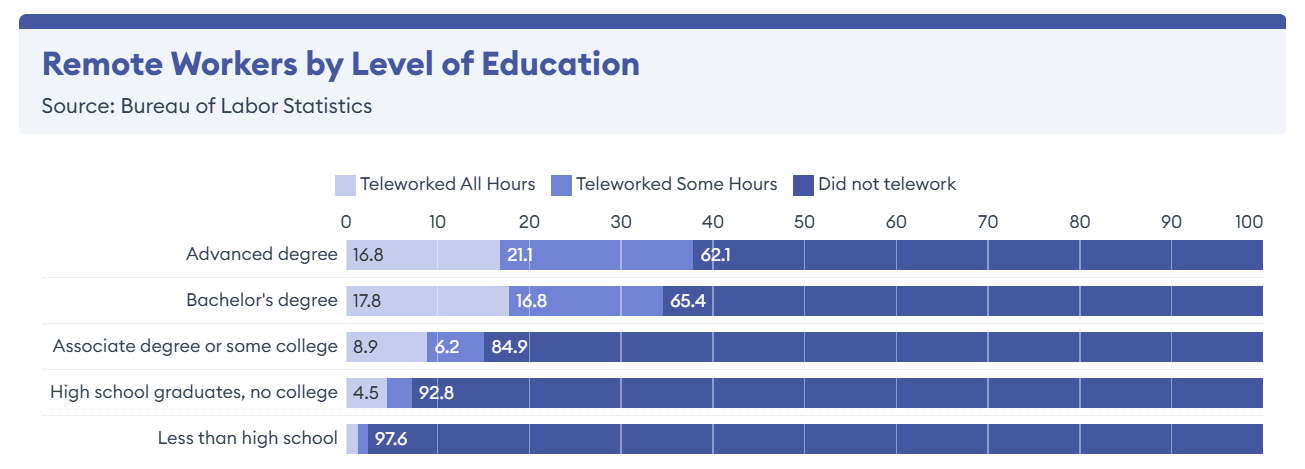
Hiring used to be tied closely to geography, which meant that if a candidate was not willing to relocate, the conversation often ended there. That dynamic has shifted as remote work has become more common. In 2025, Forbes stated that an estimated 32.6 million Americans, or about 22% of the workforce, were working remotely, and that number is even higher among more educated professionals. Roughly 38% of advanced degree holders now work remotely, which is particularly relevant in the legal field.
That change gives firms access to candidates they would not have been able to consider before. It also helps when hiring for niche practice areas, where local talent may be limited. Firms that are open to remote or hybrid arrangements often find they can be more selective, not less.
Source: Forbes
Can Improve Employee Satisfaction and Well-being
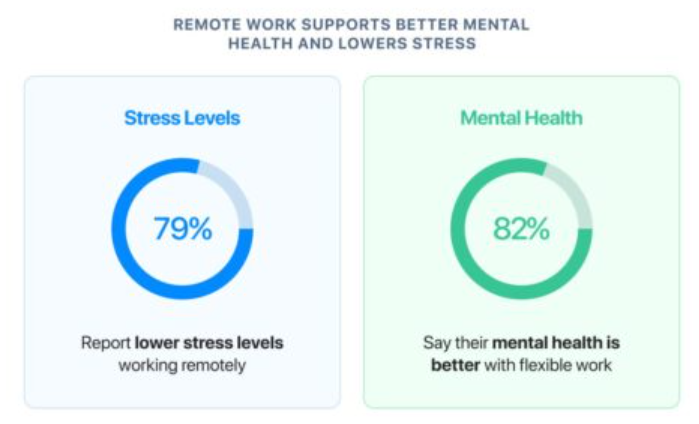
Flexibility tends to have a direct impact on how employees experience their work, particularly in demanding fields like law. In 2025, 79% of remote professionals reported lower stress levels, and 82% said their mental health improved with flexible work arrangements.
That does not mean every role should be remote, but it does highlight how meaningful flexibility can be. Even a few days at home can reduce the pressure that comes with long hours and commuting. Over time, that can make the workload feel more sustainable.
Source: Chanty
Can Reduce Turnover
Retention often follows satisfaction, and flexibility plays a role in both. When attorneys feel like their work setup fits their life, they are less likely to start looking elsewhere. That becomes important in a market where lateral movement is common and opportunities are easy to find.
Turnover is not just a hiring issue, it affects continuity, client relationships, and internal workload. Firms that hold onto their attorneys longer tend to operate more smoothly and avoid the disruption that comes with frequent departures.
Can Help Reduce Overhead
There is also a practical side to this conversation. Office space and the expenses tied to it represent a significant investment, and firms that adopt hybrid or remote policies have the opportunity to rethink how much space they actually need. Some firms reduce their footprint, while others redesign their layout around shared workspaces.
This does not eliminate overhead, but it can shift how those costs are managed. Over time, that flexibility can allow firms to invest more in areas like hiring, technology, or client development.

Reasons to Enforce a Return to Office Mandate
At the same time, not every firm sees remote work as a long-term fit. Some have moved back toward in-office expectations, either fully or in part, based on how their teams operate and the type of work they handle.
A return-to-office approach is usually driven by practical concerns, not just preference. Issues around security, coordination, training, and consistency tend to come up quickly, and for some firms, those factors are enough to justify bringing people back into the office.
Data Security and Compliance Must Be Dealt With
Legal work involves sensitive information, and not every remote setup is designed with that level of security in mind. Firms need to consider how documents are accessed, how data is stored, and how secure remote environments actually are. These are not abstract concerns, and they require real systems and oversight.
For some firms, especially those handling highly confidential matters, the office provides a level of control that is harder to replicate remotely. If remote work is part of the model, those protections need to be recreated intentionally.
WFH Can Decrease Team Building and Coordination
There is a difference between completing tasks and building a cohesive team. Remote work can make interactions more transactional, which can limit opportunities for mentorship and informal learning. Over time, that can affect how attorneys develop, especially earlier in their careers.
In-person environments tend to create more natural opportunities for collaboration and guidance. Those moments are harder to replicate over scheduled calls. Firms that rely heavily on training and mentorship may find that a fully remote model makes that more difficult to maintain.
Ill-Structured WFH Policies Decrease Performance
When remote work does not function well, the issue is often the lack of structure rather than the model itself. Unclear expectations, inconsistent communication, and weak accountability can create confusion and slow progress. Without a defined framework, performance can start to drift.
Some firms react to this by bringing everyone back into the office, but the underlying issue is often how the work was managed. A poorly defined policy will struggle in any environment, and remote work tends to make those gaps more visible.
Out-of-State Employment Can Cause Issues
Expanding beyond a single geographic market introduces complexity, particularly around tax obligations, employment laws, and compliance requirements. These issues are not always obvious at the start, but they can create challenges as hiring expands across state lines.
Firms need to understand what is required in each jurisdiction where they have employees. Without that, administrative burdens can build quickly. The flexibility to hire broadly is valuable, but it needs to be supported by a clear plan.
Is Hybrid Work the Best of Both Worlds?
Many firms have settled into hybrid models because they offer a balance between flexibility and in-person collaboration. Attorneys can work remotely when they need focus and come into the office for meetings, client interactions, and team coordination.
At the same time, hiring trends suggest firms are still leaning toward in-office expectations. In Q1 2026, 77% of new job postings were fully on-site, compared to 19% hybrid and 4% fully remote. That gap between employer preference and candidate expectation is something firms are still working through, and it often shows up in hiring conversations.
Making WFH Better for Your Law Firm and Employees
For firms that decide to keep some level of remote or hybrid work, the focus shifts from whether it works to how well it works. Most of the challenges tied to work-from-home policies come down to execution, not the concept itself.
When expectations are clear and the right systems are in place, remote work can run just as smoothly as an in-office model. It takes a bit more intention, but firms that put structure around it tend to avoid the common issues and get more consistent results.
Set a Firm Policy and Expectations and Write It Down
Most issues with remote work come from ambiguity. When expectations are not clearly defined, individuals interpret them differently, which leads to inconsistency. Establishing clear guidelines around in-office expectations, availability, and performance standards helps create alignment across the team.
It also removes guesswork. People know when they are expected to be present, how communication should work, and how performance is evaluated. That clarity tends to reduce friction and make the policy easier to follow.
Review Your Cybersecurity and Policies
If remote work is part of your model, your systems need to support it. That includes secure access, updated protocols, and clear policies for handling sensitive information outside the office.
Regular review is important here. Technology changes, risks evolve, and policies that worked before may not be enough now. Firms that stay proactive tend to avoid problems before they become serious.
Provide Employees with What They Need for Remote Work
Productivity depends in part on the environment in which the work is done. Not everyone has a setup at home that supports focused, consistent work. Providing the right tools, equipment, and support helps close that gap.
This can be as simple as ensuring access to the right systems or as involved as helping employees create a functional workspace. When expectations are high, the environment needs to support them.
Work-from-home policies are no longer a short-lived decision. They are part of how firms define culture, manage teams, and compete for talent. There is no single approach that works for every firm, but the ones that are intentional about structure and expectations tend to see better outcomes.
Momentum Search Partners works with law firms navigating these decisions in real time, especially as they impact hiring and retention. If you are evaluating how your policies are affecting your ability to attract and keep the right talent, it may be worth a conversation. Contact Momentum Search Partners today.